The Fishermans Mother - Look at me now!

Look at Me Now

Do you know those moments when you realise how much you have actually transformed yourself as a result of having dared to take the road less travelled to follow your Authentic Path?

One summer I was reunited with a dear old friend, from the days when I worked in the corporate sector. She had the ability to ignite my imagination and lift me from an environment that wasn’t suited to my sensibilities.

A cramped office, surrounded by folk who resented being so close to each other, carrying out tasks they felt were beneath their true capabilities. For me it was just a means to an end. Tension was rife at times. Lunch time was my only escape from a boss who seemed to think he was the gunman in an old spaghetti western and who treated most of his colleagues as his worst enemies.

Not far from this edgy existence, Irelands National Art Gallery provided a quiet bench for me to take my lunch in peace before entering to view inspiring works of art.
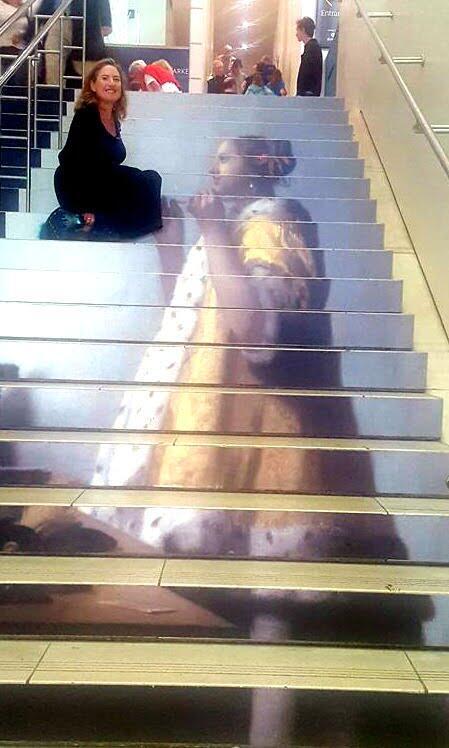
"She still had that extra-ordinary glow and wisdom shining through her eyes, just as artist Helen Mable Trevor had captured."

My University of Art

I made many interesting discoveries during my lunchtime visits to the gallery. I found out that William Dargan (1799-1867), the great Irish railway magnate, was originally from Carlow, my home county. Also, George Bernard Shaw who bequeathed one third of his royalties to the National Gallery, also had a Carlow connection on his mother’s side. Shaw described the National Gallery as his ‘University’. I decided to make it mine too.

During every visit, there was one painting that became a ‘must-see’ for me. Looking back now, I think we were in conversations with each other. Eventually, I left that ‘unsuitable’ office environment and moved further from the city. My visits were less frequent and eventually the National Gallery closed many of its doors in order to facilitate a major refurbishment project that took at least six years to complete.

"Here I stood, having exhibited my artwork many times, an author of books and blogs, a traveller of the world, a therapist and someone with wonderful friendships & connections made in the process."

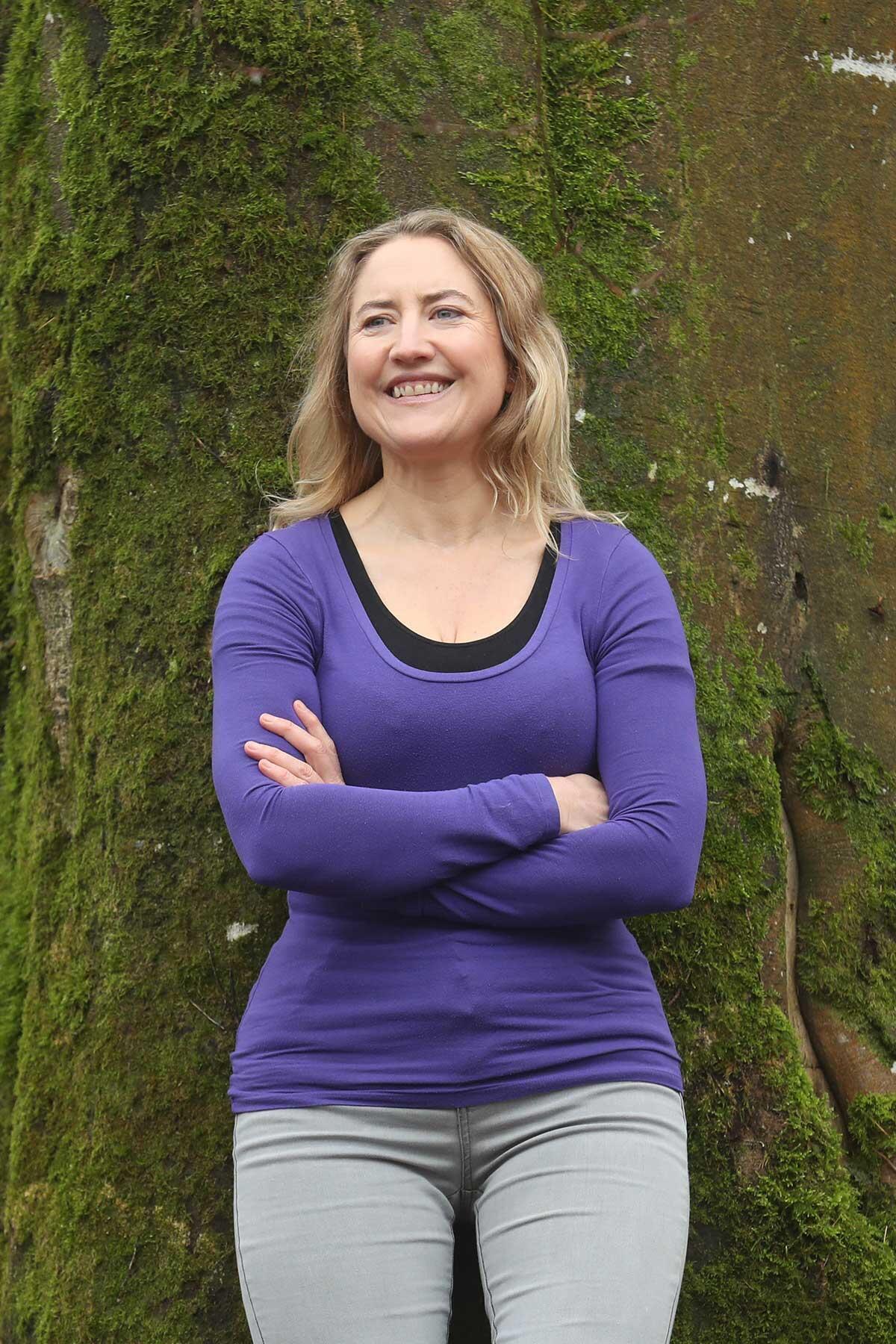
Caroline Cunningham
Authentic Path Coach, Author & Artist
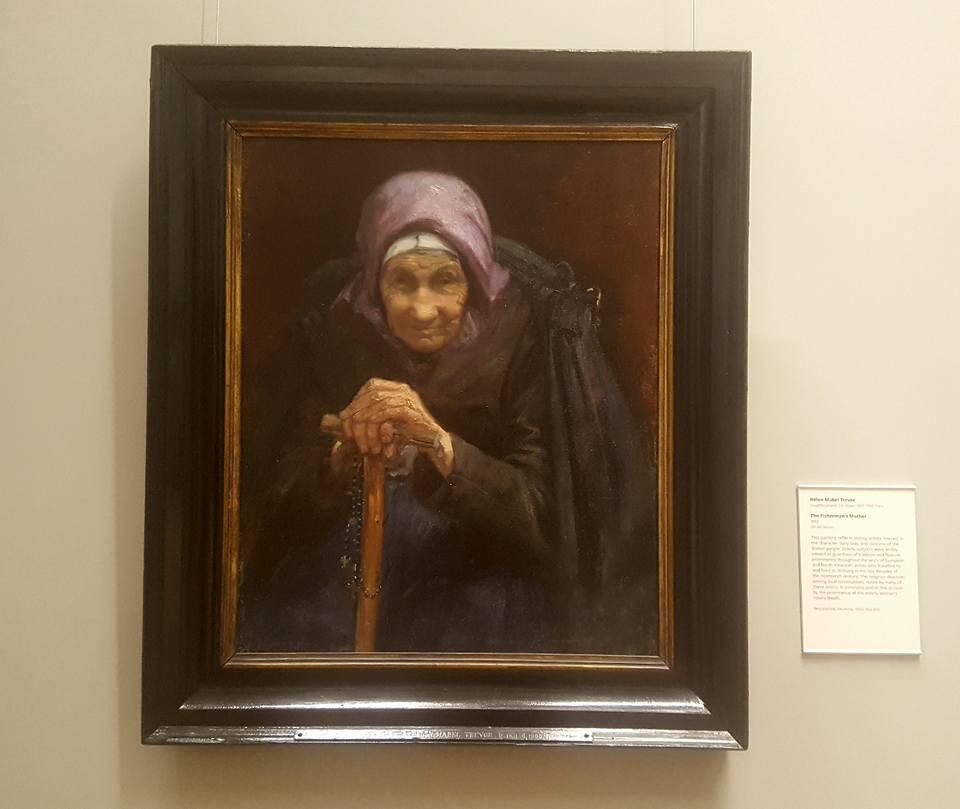
The Fisherman’s Mother by Helen Mable Trevor

Revisiting The Fisherman’s Mother

Summer 2017, the doors reopened. I went to visit my old friend. I knew she would be there. I went straight to the spot, just like I used to do when I had lived nearby. I stood before ‘The Fisherman’s Mother’ with a few fond tears in my eyes. ‘Look at you now’, it was like we were both saying this to each other. She still had that extra-ordinary glow and wisdom shining through her eyes, just as artist Helen Mable Trevor had captured.

I stood before my old pal realising how much I had achieved since she had last gazed upon me. I was no longer standing at the edges of the world of creatives.

I was transported back to those days of standing before ‘The Fisherman’s Mother’. Had she been imparting her message all along? ‘I’ve lived, I know a thing or two. Don’t be foolish. Work hard at the right things. Be true to yourself.’ I had heard her loud and clear.

What about Your Authentic Path?

Are you someone who is searching for purpose and meaning in life? Are you curious about the opportunities and adventures that could unfold if you dared to step out of your comfort zone? Do you know what holds you back?

This story gives you a window into my journey along the Authentic Path which calls for developing confidence, trust, along with calling on courage and the innate gifts you possess. What steps are you willing to take to bring more of your authenticity into the light for the benefit the world? Make a start today by signing up here for Authentic Path inspiration and offers.

Calling out Anxiety for what it is!

Top Secret Stuff

If you suffer from anxiety it is quite likely that along with the discomfort of the anxiety itself, you have also been working hard to keep it top secret.

In this competitive world of ours, we do all we can to keep the bright side out, to look our best and be strong. Appearing weak and vulnerable doesn’t seem to fit with the way of things. Yet, sometimes by exposing that very part of ourselves we actually grow stronger.

More and more people (including myself), are calling it out that they have suffered mental anguish and despite this they have managed to overcome all sorts of trials. Our stories of triumph over anxiety contribute to the ending of stigmas and inspire others to take action to seek an improved life experience.

What it is & What it’s Not

Anxiety is actually more like a learned behaviour, habit or response to something that has caused trauma at some point in our lives, particularly at an early age when we are most susceptible and lacking in knowledge.

It’s suggested in some circles that being of a more sensitive disposition makes us more susceptible to anxiety. I am of the opinion that without role models to show us that sensitivity is actually a strength and not weakness we may fool ourselves to thinking it’s all our own fault and not much we can do. We owe it to each other to be that role model. Recovery from anxiety is possible whether you have the gift of heightened sensitivity or not.

What’s Going On

Some amount of anxiety is normal and, similar to fear, it alerts us to take stock of something or pay attention in certain situations. Messages we pick up through our environment, combined with thoughts/stored memories can lead to sensations in our body, triggered by our nervous and endocrine (hormonal) systems.

Adrenaline is one of the notable hormones being released into our blood stream when we are anxious. The term ‘fight or flight’ is used to describe how adrenaline prepares our body when we feel there may be some threat or danger imminent e.g. delivering more glucose and oxygen to specific sites such as muscles to help us move faster by generating more energy.

Anxiety (including panic attacks and phobias) however can be triggered when there is no apparent threat. Parts of our brain (e.g. the limbic system) house an extensive record of stored memories, for comparison purposes, with our on-going life experiences. If a significant match is found in these records, suggesting something in our current environment is not good for us or may cause a problem then the stress response is likely to be triggered.

Damaging Long-Term Effects

When anxiety is constantly being triggered you are effectively ‘leaking adrenaline’ into your system. Left unattended, this constant excess of adrenaline has consequences for our long-term health and well-being.

Energy level, sleep quality and concentration are all set to suffer. There can be consequences too for creating imbalance in our endocrine system, as hormones affecting fertility and digestion are impacted by excess amounts of adrenaline.

Another detrimental factor of prolonged anxiety (especially if it presents as panic attack or phobia) is the avoidance of places, situations and people. This in turn can lead to restricted life experiences which can impact our self-esteem and mental health by cutting off some of our basic needs which are obtained from social engagement and personal relationships.

"Seven Cs to Calm is a good investment for people who want to restore calm and experience life with more purpose and joy."

Caroline Cunningham Author & Authentic Path Coach

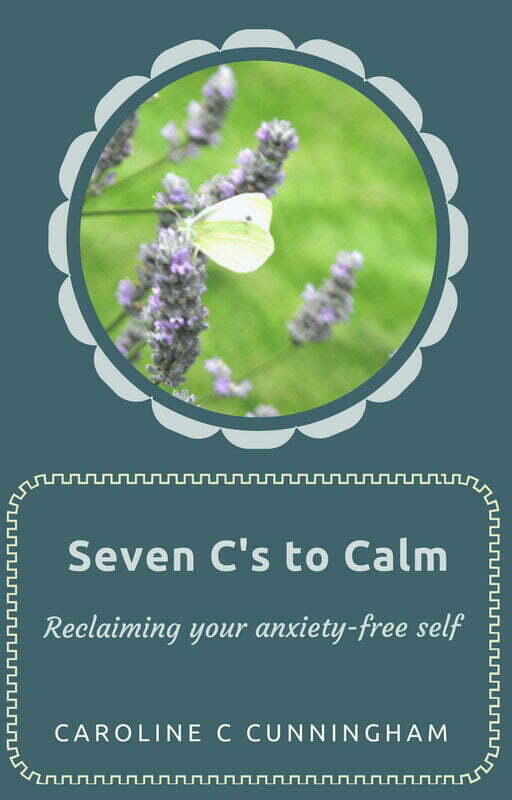
Seven C’s to Calm Book

I wrote Seven C’s to Calm – Reclaiming your anxiety-free self’ to provide support and encouragement for people who are suffering with anxiety and especially for those of you who do not know where to start.

In this little book, I share insights and tips that I’ve learned from my 20 years+ of personal experience and study, which have empowered me to live with greater authenticity and wellbeing.

Designed with Purpose

  • The book is intentionally small and simple because we tend to feel over-whelmed when anxious.
  • Seven C’s to Calm can be discreetly carried in your handbag or satchel and can act as a powerful anchor as you go about your day to day business.
  • A workbook is provided to make it easy for you to implement the suggestions in the Seven C's plan.

Reader Reviews

My readers have given Seven C’s to Calm a resounding thumbs up for its effectiveness and no-nonsense approach.

Laura, Carlow, Ireland

"Seven C’s to Calm’ is a handy guide that can be easily referred to because of its size. The content and the 7 C’s idea is good. I am going to use it with an anxious child of mine."

Teresa, Dublin, Ireland

"Seven C’s to Calm is absolutely excellent, informative, honest and easy to comprehend"

Mary, Dublin, Ireland

"Love it! I found ‘Seven C’s to Calm’ very positive, I loved the idea of a three month plan and finding your comfort place. I am going to start now writing down three positive things that happened during the day and look back over them at the end of the week. A lovely idea and I think very positive. I will read this again. I think ‘Seven C’s to Calm’ is something you can keep referring to."

Bernadette, Wexford Ireland

"Seven C’s to Calm’ is beautifully written and full of useful and meaningful information.  I also found it very calming. I like the way you made it very simple and instructive as to what people can do and you continued to remind people that it is small steps that matter. I really like the writing style as it is easy to read and not jarring.  You know the books that tell you it’s all so simple, which is nonsense but the fact that you have been through this really pulls in the reader to act on your suggestions."

Margaret, Dublin, Ireland

"I have just finished reading and re-reading Seven C's to Calm. I found it very inspiring. When you’re feeling anxious it's often overwhelming but the practical ideas in this book make it seem manageable. Setting a three month goal is a great idea as sometimes people think it's an overnight fix and that there is something wrong when not feeling better straight away. Also I found giving helpful suggestions for the daily and weekly plan is great as sometimes even wondering what to do for that can cause anxiety in itself so when you see the suggestions it's really helpful."

Janet, London, UK

"I read your book and I have to say I found it very good, it is very clear, precise and to the point with good suggestions. I will certainly use it in the coming months."

5 Steps To Becoming A Robot - Is this happening to you?

Human Check-In

Imagine a mechanical society with no thinking or feeling, everyone rushing about on auto-pilot, elbowing out of the way anything that appears on the horizon that doesn't match in with their preferred mode of existence. Would you be happy with this? Do you think it’s already happening on our streets? How can keep you in touch with your human side and does being authentic even matter?

The following questions may help to determine if you are in danger of becoming a robot.

Q1. Is your life running completely on schedule, every minute accounted for, your targets maxed out to the last with someone reminding you that you could achieve a little more if you try harder (that someone could even be you).

Q2. Do you only read articles that start with headings such as '5 Steps To This' and '3 Ways To Do That' because you don't have time to read real life stories of personal interest which aim to impart wisdom in a more meaningful way?

Q3. Do the important people in your life have the opportunity to connect with the flesh and blood version of your true self? Are you around long enough and present for that to happen?

Q4. Does your food taste really good? Does it interest you at all? Can you smell the subtlety of flowers and does colour have any impact on your being? What about birds, are they just for birds?

Q5. Can you feel your toes? Are you becoming numb to what's inside and outside of yourself? Do you expect to be repaired like a machine when part of you stops working, without your input or without any change from your current mode of being?

"Assuming you are still human, use your intuition to decide if you are in danger of becoming a robot."

Caroline Cunningham
Authentic Path Coach

What do you need to do to keep robot life at bay?

A healthy mind and body is one that is nurtured from the inside out. Without proper attention to both you’re in danger of neglecting signs that your health may be deteriorating. Developing self-care strategies that lead to resilience, stand to us in times of challenge such as when there are upheavals in your work or personal life or both. It’s not just about eating the right food and getting the right amount of exercise. We need strategies for managing the effects of stress and better coping mechanisms in general.

In addition, touch therapies such as reflexology help to keep us in touch with our human side by alleviating us of the tensions that build up over time. By developing the senses, absorbing colour, smell, taste and sounds, we have the ability to be more present to ourselves and others.

Knowing is Not Enough

Even when people know what they need to do to maintain their wellness, studies show that knowing is simply not enough. The biggest obstacle to putting self-care strategies into place and implementing them is actually due to a default feature of the human brain. In my coaching programmes I show my clients how to deal with these obstacles in order to stay on track for successful living.

"Aim to enrich your life. Show your human side. You deserve the best of care."

Caroline Cunningham
Authentic Path Coach

On behalf of actual robots, I apologize for implying that you are not appreciated in our society. The first robot I ever learned of was Hal (of Arthur C. Clarke fame), he paved the way for all robots and raised a lot of sympathies. As for us human’s, it’s better for us to remember that we are in fact human.

This article was finalist in the business category of Ireland Blog Awards in 2015.

Are You Becoming an Endangered Human?

Developing self-awareness is crucial for success in all aspects of life. Modern living offers us many paths to neglecting ourselves, leading to burn-out. I help people to move towards being more authentic and I believe this is the key to our wellness, happiness and success. I believe it's never too late to change, to develop new out-looks and by doing so we make it possible for others to do the same. Join me for Authentic Path Inspiration or check out my range of books, courses and coaching services.

Hanne Marquardt Reflexotherapy

"What is Reflexotherapy of the feet and who is Hanne Marquardt?"

Thanks to my studies of the history of reflexology, I already knew that Hanne Marquardt has played a key role in it's research and development.

In the summer of 2014, I enroled in a workshop to discover more about this fascinating pioneering therapist and teacher.

'I'm going to be '80' soon', Hanne informed us at the outset of our two day course. Her eyes twinkled perhaps with curiosity as to what this new age bracket might herald. That curiosity has remained alive and well for Hanne, who as a young nurse and physiotherapist became most interested in the findings outlined by Eunice Ingham in her book 'Stories The Feet Can Tell'.

Eunice Ingham is attributed with developing the term 'reflexology' and with the mapping of the whole body onto reflex areas of the feet. Thus we have a micro-system which reflects the whole person in the feet.

Hanne wistfully reflected on the fact that she actually set out to disprove Eunice's findings. In those early days of investigation, the claims of reflexology were considered quite radical and new.

As I attempted to probe Hanne with my own investigative questions I got a glimpse of how brave she must have been to challenge her pioneering teacher.

Hanne admitted humble defeat in her efforts to disprove Eunice's results. Instead she developed a growing respect for her teacher and the practice of reflexology.

Reflexo-Therapy Training
With Hanne Marquardt

She has earnestly and whole-heartedly, continued its development and practice, fine-tuning the position of reflex areas and treatment techniques according to her own findings and thereby opening the door to her use of the term 'Reflexotherapy'.

Two days we spent with Hanne, eagerly listening as she imparted much wisdom and knowledge interspersed with humour and anecdotes for living simply and fruitfully.

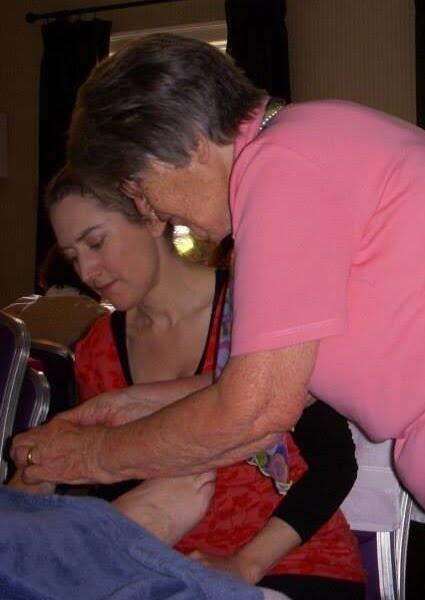
We watched intently as she demonstrated techniques for treating sensitive reflex areas and harmonising holds. We were put through our paces as she challenged us to locate the reflex areas corresponding to scars on the body of the person being treated. We practiced the treatment of scars and all that she demonstrated to us, under her watchful eye.

Thanks to pioneers such as Eunice Ingham and Hanne Marquardt, reflexology has grown to be a highly respected and recognised therapy.

In Germany, however, Hanne has gained even further recognition for her use of reflexotherapy, as she treats 'patients' instead of 'clients', and for 'specific illnesses' rather than 'generally'.

'Always remember', she paused for effect, 'you are treating a person not a body or just their feet but a whole person.' In order not to forget this fact, Hanne urged us to use the term 'someone' as opposed to 'somebody'.

Studying with Hanne as our tutor was a productive and valuable learning experience. As we parted company she urged us to be creative in our practice and to be mindful of the unique potential that exists in all of us.

Have you experienced the benefits of reflexology?

This article was listed in the Finals of Ireland Blog Awards 2017 in the category of Best Corporate Article.

2017 Finalist Best Corporate Article